Getting to Big Sur can be one of the most memorable road trips in California. Whether traveling north or south along Highway 1, the journey offers breathtaking Pacific Ocean views, dramatic coastal cliffs, towering redwoods, and some of the country’s most spectacular scenery.
Located along California’s Central Coast, Big Sur stretches between Carmel-by-the-Sea and the San Simeon area. Unlike traditional destinations, Big Sur is a coastal region rather than a single town.
Visitors can approach Big Sur from two directions. Travelers from San Francisco typically drive south through Monterey and Carmel. Meanwhile, visitors from Los Angeles often travel north through San Luis Obispo, Morro Bay, and Cambria.
Both routes offer spectacular scenery, historic landmarks, coastal communities, and interesting places to explore.
This guide explains how to reach Big Sur, where to stop, driving distances, accommodations, and the best time to visit.
Important: Check Highway 1 Road Conditions Before Traveling
Highway 1 through Big Sur can experience temporary closures due to landslides, storms, road maintenance, and other safety concerns. Consequently, driving between Carmel and Cambria may not always be possible.
Before starting your trip, check Caltrans QuickMap for current road closures, construction, and traffic conditions. If Highway 1 is closed, US Highway 101 generally provides the main inland alternative between Northern and Southern California.
Where Is Big Sur Located?
Big Sur lies along California’s Central Coast in Monterey County. The region extends roughly 90 miles along the Pacific Ocean. Here, the Santa Lucia Mountains rise sharply above the coastline.
Carmel-by-the-Sea marks the northern gateway. Meanwhile, San Simeon and Cambria provide convenient access from the south.
Highway 1 serves as the primary road through Big Sur. However, the region has few connecting roads and limited public transportation.
Central Big Sur sits approximately 26 miles south of Carmel. Popular attractions and accommodations are spread across the coastline, so driving distances vary.
How to Get to Big Sur from San Francisco
Driving south from San Francisco is a popular way to reach Big Sur. The journey passes through Monterey Bay before continuing toward Carmel and the rugged coast.
The drive from San Francisco to central Big Sur covers approximately 150 miles. Under favorable conditions, travelers should allow around three hours or more.
However, the journey offers enough attractions to fill a full day or longer.
San Francisco to Monterey
From San Francisco, take US Highway 101 south toward the Monterey Peninsula. Then connect with Highway 156 west and Highway 1 south.
Alternatively, travelers can follow coastal Highway 1 through Half Moon Bay and Santa Cruz. This route takes longer but offers additional ocean scenery.
Monterey makes a convenient stop before entering Big Sur.
Visitors can explore Cannery Row, Old Fisherman’s Wharf, and the Monterey Bay Aquarium. Additionally, the surrounding coastline provides opportunities for walking and wildlife viewing.
Monterey also offers a broad selection of hotels and restaurants. Therefore, it works well as an overnight destination.
Monterey to Carmel-by-the-Sea
Continue south toward Carmel-by-the-Sea, approximately five miles from Monterey.
Carmel is known for its village atmosphere, art galleries, restaurants, and scenic coastline.
Visitors can explore downtown Carmel, walk along Carmel Beach, or visit nearby Point Lobos State Natural Reserve.
Additionally, the famous 17-Mile Drive through Pebble Beach offers coastal scenery and access to several recognizable landmarks.
Carmel is the last major coastal community before Big Sur. Consequently, it’s a convenient place to purchase supplies, enjoy a meal, or spend the night.
Golf Courses Near Carmel-by-the-Sea and Pebble Beach
The Monterey Peninsula is one of California’s most recognized golf destinations. For travelers interested in golf, the Carmel and Pebble Beach area offers several notable courses.
Many are located near 17-Mile Drive, making golf a possible addition to a Big Sur road trip.
Pebble Beach Golf Links is one of the world’s most famous public-access golf courses. Its fairways follow the Pacific coastline, offering dramatic views of rocky headlands and ocean cliffs. The course has also hosted several major golf championships.
Spyglass Hill Golf Course combines coastal dunes with forested terrain. Its opening holes feature ocean views before the course continues through Monterey pines.
The Links at Spanish Bay features a Scottish links-inspired design along the Monterey Peninsula coastline. The course is known for its ocean setting and windswept landscape. Visitors should check current availability because renovations can affect play.
Poppy Hills Golf Course offers another option within the Del Monte Forest. Unlike the oceanfront courses, Poppy Hills emphasizes tree-lined fairways and a natural woodland setting.
Golf enthusiasts may also consider Quail Lodge Golf Club in Carmel Valley. Its course follows a more sheltered valley landscape, surrounded by rolling hills and mature trees.
Tee times, visitor access, and booking requirements vary by course. Therefore, golfers should confirm availability and reservations well before traveling.
For travelers planning to play a full round, an additional night in Carmel, Pebble Beach, or Monterey may be worthwhile.
Carmel to Big Sur Along Highway 1
From Carmel, continue south along Highway 1 toward Big Sur.
This section introduces some of California’s most dramatic coastal scenery. The road follows steep cliffs, winding canyons, and rugged Pacific Ocean headlands.
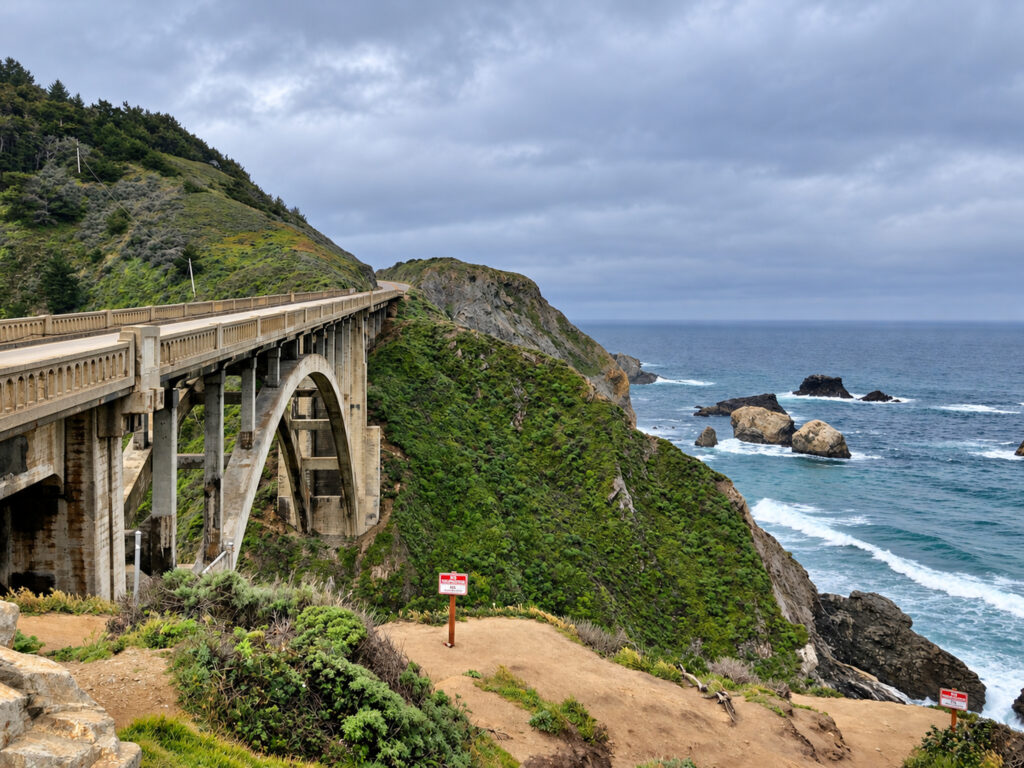
Along the way, travelers pass Bixby Creek Bridge and Garrapata State Park.
Farther south, the landscape transitions into redwood forests near the Big Sur River.
Visitors can explore Pfeiffer Big Sur State Park, nearby restaurants, and established scenic attractions.
However, Highway 1 remains an active two-lane road. Always use designated parking areas and avoid stopping along unsafe shoulders.
How to Get to Big Sur from Los Angeles
Travelers approaching from Los Angeles can explore several Central Coast communities before reaching Big Sur.
The route generally follows US Highway 101 north toward San Luis Obispo. From there, visitors can connect with Highway 1 and continue toward the coast.
The drive from Los Angeles to central Big Sur covers roughly 300 miles, depending on the route.
Without extended stops, allow approximately six hours or more. However, a leisurely coastal journey can easily fill two days.
Los Angeles to San Luis Obispo
Begin by taking US Highway 101 north from Los Angeles.
The route passes through Ventura and Santa Barbara before continuing toward San Luis Obispo.
Known locally as SLO, San Luis Obispo offers a walkable downtown, restaurants, hotels, and nearby outdoor attractions.
Visitors can explore Mission San Luis Obispo de Tolosa or enjoy the shops and cafés downtown.
Additionally, the city offers several lodging options for an overnight stay.
San Luis Obispo to Morro Bay
From San Luis Obispo, head west toward Morro Bay.
This small coastal city is known for Morro Rock, a massive volcanic formation rising above the harbor.
Visitors can enjoy waterfront walks, local restaurants, and views across the bay.
Morro Bay also offers kayaking, wildlife viewing, and nearby state parks.
As a result, it provides another convenient overnight option along the Central Coast.
Morro Bay to Cambria
Continue north along Highway 1 through Cayucos toward Cambria.
Along the way, travelers encounter sandy beaches, rolling hills, and open coastal views.
Cambria is a small seaside community known for its pine forests, art galleries, and relaxed atmosphere.
Moonstone Beach is among its most recognizable attractions. Its coastal boardwalk offers ocean views and opportunities to observe wildlife.
Additionally, Cambria features boutique hotels, small inns, and vacation accommodations.
For visitors approaching Big Sur from Los Angeles, Cambria is an appealing place to spend the night.
Hearst Castle in San Simeon
Just north of Cambria, Hearst Castle offers a historic and cultural attraction along Highway 1.
The hilltop estate was developed for newspaper publisher William Randolph Hearst. Architect Julia Morgan designed the property, which overlooks the Pacific coastline.
Today, Hearst Castle operates as a California State Park historic monument and museum. Its buildings feature elaborate architecture, art collections, landscaped terraces, and famous swimming pools.
Visitors can explore the estate through guided tours. Different tour options highlight its grand rooms, guest cottages, architectural details, and history.
However, visitors cannot simply drive to the hilltop estate. Tours generally begin at the visitor center and include transportation to the castle.
Because tours can fill quickly, advance reservations are recommended. Check the official Hearst Castle website for tour availability and visitor information.
Hearst Castle is a worthwhile stop for travelers interested in California history, architecture, and art. Allow several hours if you plan to take a tour.
Nearby, the Piedras Blancas elephant seal viewing area provides another opportunity to explore the San Simeon coastline.
Cambria to Big Sur Along Highway 1
From Cambria, continue north through San Simeon toward the southern Big Sur coastline.
This section introduces increasingly rugged coastal scenery. The road follows steep mountainsides and remote stretches of the Pacific coast.
Ragged Point is a familiar landmark along the southern approach.
Farther north, travelers can explore attractions such as Sand Dollar Beach and Limekiln State Park when access is available.
Eventually, Highway 1 reaches central Big Sur before continuing toward Carmel.
However, landslides and repairs can occasionally interrupt through-travel. Therefore, always confirm that Highway 1 is open before leaving Cambria.
Highway 1 Big Sur Road Conditions and Closures
Highway 1 is the main route through Big Sur. Although the road offers remarkable coastal scenery, it also crosses unstable terrain.
Heavy rainfall, landslides, wildfires, and construction can cause temporary closures.
Consequently, access between Carmel and Cambria may change without much notice.
When Highway 1 is closed, travelers may need to approach different sections of Big Sur from opposite ends.
US Highway 101 serves as the main inland alternative between the Monterey Peninsula and San Luis Obispo County. However, it does not provide direct access to most Big Sur attractions.
Before departing, consult Caltrans QuickMap for current highway conditions.
Additionally, review California State Parks notices for trail closures and restricted access.
Best Time to Visit Big Sur
Big Sur offers beautiful scenery throughout the year. However, weather and road conditions vary by season.
Spring
Spring brings green hillsides, blooming wildflowers, and flowing waterfalls.
Temperatures are often comfortable for hiking and sightseeing. However, occasional storms can affect highway and trail conditions.
Summer
Summer offers longer daylight hours and generally dry weather.
However, coastal fog often covers the shoreline, especially during mornings.
Popular attractions and accommodations can also become busy.
Fall
Fall often brings clearer skies and comfortable daytime temperatures.
Additionally, the season can offer excellent coastal visibility and fewer visitors after summer.
However, dry vegetation can increase wildfire concerns.
Winter
Winter transforms Big Sur with dramatic clouds, green hillsides, and increased waterfall flows.
Nevertheless, heavy rain can trigger landslides and road closures. Therefore, winter travelers should monitor forecasts and maintain flexible plans.
For many visitors, spring and fall offer a good balance of scenery and comfortable weather.
Where to Stay When Visiting Big Sur
Accommodation choices depend on your route, budget, and preferred activities.
Visitors can stay within Big Sur or use nearby coastal towns as overnight bases.
Staying in Monterey, Carmel, or Pebble Beach
Monterey and Carmel provide convenient accommodations for travelers arriving from San Francisco.
Monterey offers hotels, inns, and larger lodging properties. Meanwhile, Carmel features boutique hotels and small inns.
Pebble Beach also offers upscale lodging, particularly for travelers planning golf activities.
All three areas provide access to restaurants, shops, and coastal attractions.
Additionally, staying near Carmel allows visitors to begin exploring northern Big Sur without a lengthy drive.
Staying in Big Sur
Staying within Big Sur offers a more immersive coastal experience.
Accommodations range from luxury resorts and rustic cabins to campgrounds among redwood forests.
Well-known properties include Post Ranch Inn, Alila Ventana Big Sur, Big Sur River Inn, and Fernwood Resort.
State parks and privately operated campgrounds also offer overnight options.
However, lodging availability is limited. Therefore, booking ahead is advisable during popular travel periods.
Staying in Cambria or San Simeon
Cambria and San Simeon offer convenient accommodations for travelers arriving from Los Angeles.
Cambria features small inns, boutique hotels, and oceanfront lodging near Moonstone Beach.
Meanwhile, San Simeon provides additional options near Hearst Castle and the southern approach to Big Sur.
Both communities work well as overnight bases.
However, travelers should verify Highway 1 access before planning a northbound drive through Big Sur.
How Many Days Do You Need in Big Sur?
The ideal trip length depends on your interests and available time.
One day: A day trip allows visitors to enjoy scenic Highway 1 and several major attractions. However, driving time may limit longer activities.
Two days: A weekend provides more opportunities for coastal viewpoints, short hikes, restaurants, and state parks.
Three days: A longer visit provides additional flexibility for outdoor activities and nearby communities.
For a complete road trip between San Francisco and Los Angeles, consider allocating at least two or three days to the Central Coast.
Golf near Carmel or a Hearst Castle tour may justify adding another day.
Driving Tips for Visiting Big Sur
Driving through Big Sur requires more preparation than a typical highway trip.
The road features narrow lanes, sharp curves, steep cliffs, and limited services.
Before traveling, consider these tips:
- Check road conditions: Highway 1 closures can affect access from either direction.
- Refuel before entering: Gas stations are limited, and fuel may cost more in remote areas.
- Download offline maps: Cell service is unreliable throughout much of Big Sur.
- Allow extra time: Scenic roads, slow traffic, and construction can delay travel.
- Use designated parking areas: Never block traffic or stop along unsafe shoulders.
- Carry supplies: Bring water, snacks, and essential travel items.
- Limit nighttime driving: Sharp curves, poor visibility, and wildlife require extra caution.
Additionally, check state park conditions before visiting trails, beaches, or scenic attractions.
Frequently Asked Questions About Getting to Big Sur
How Far Is Big Sur from San Francisco?
Central Big Sur is approximately 150 miles south of San Francisco.
Driving generally takes three hours or more without extended stops.
How Far Is Big Sur from San Francisco International Airport (SFO)?
Central Big Sur is approximately 125–135 miles from San Francisco International Airport.
The drive generally takes around 2.5–3 hours under favorable conditions.
How Far Is Big Sur from Los Angeles?
Central Big Sur is roughly 300 miles from Los Angeles, depending on your starting point and route.
Driving generally takes six hours or longer without extended stops.
How Far Is Big Sur from Los Angeles International Airport (LAX)?
Central Big Sur is approximately 295 miles from Los Angeles International Airport.
The drive typically takes six hours or more, depending on traffic and highway conditions.
What Is the Closest Airport to Big Sur?
Monterey Regional Airport (MRY) is the closest commercial airport serving northern Big Sur.
San Jose International Airport (SJC) and San Francisco International Airport (SFO) offer additional flight options.
Meanwhile, San Luis Obispo County Regional Airport (SBP) serves the southern Central Coast.
Can You Drive Through Big Sur on Highway 1?
Yes, when Highway 1 is fully open, travelers can drive between Carmel and Cambria through Big Sur.
However, landslides, storms, and construction can interrupt through-travel.
Always check Caltrans before planning your route.
Can You Play Golf Near Big Sur?
Yes. The nearby Monterey Peninsula offers several recognized golf courses.
Options include Pebble Beach Golf Links, Spyglass Hill, Poppy Hills, and courses in Carmel Valley.
However, tee times and visitor policies vary, so advance planning is recommended.
Is Hearst Castle Near Big Sur?
Yes. Hearst Castle is located in San Simeon, south of the main Big Sur region.
It makes a convenient stop for travelers approaching from Los Angeles or continuing south toward Cambria.
However, Highway 1 must be open for a continuous coastal journey.
Is Big Sur Better to Visit from the North or South?
Both directions offer exceptional scenery.
Driving south from Carmel places the ocean on the passenger side. Meanwhile, driving north from Cambria allows travelers to explore the southern coastline before reaching central Big Sur.
Your preferred route generally depends on your starting point and travel plans.
Can You Visit Big Sur Without a Car?
Visiting Big Sur without a car is possible but challenging.
Public transportation is limited, and attractions are spread across a long coastal region.
Therefore, renting a vehicle or arranging transportation is generally the most practical choice.
Plan Your Big Sur Road Trip
Getting to Big Sur is part of the experience. Whether traveling from San Francisco or Los Angeles, the journey offers some of California’s most memorable coastal scenery.
Visitors heading south can explore Monterey, Carmel, and the golf courses of Pebble Beach. Meanwhile, northbound travelers can enjoy San Luis Obispo, Morro Bay, Cambria, and historic Hearst Castle.
Along the way, Highway 1 connects coastal towns, state parks, and remarkable natural landmarks.
However, preparation remains important. Check road conditions, reserve accommodations, and allow enough time to enjoy the journey.
For more travel inspiration, explore our guides to the best things to do in Big Sur, where to stay, hiking trails, and scenic Highway 1 attractions.