Learn about Bixby Bridge in Big Sur, including its history, location, Highway 1 parking restrictions, and important roadside safety considerations.
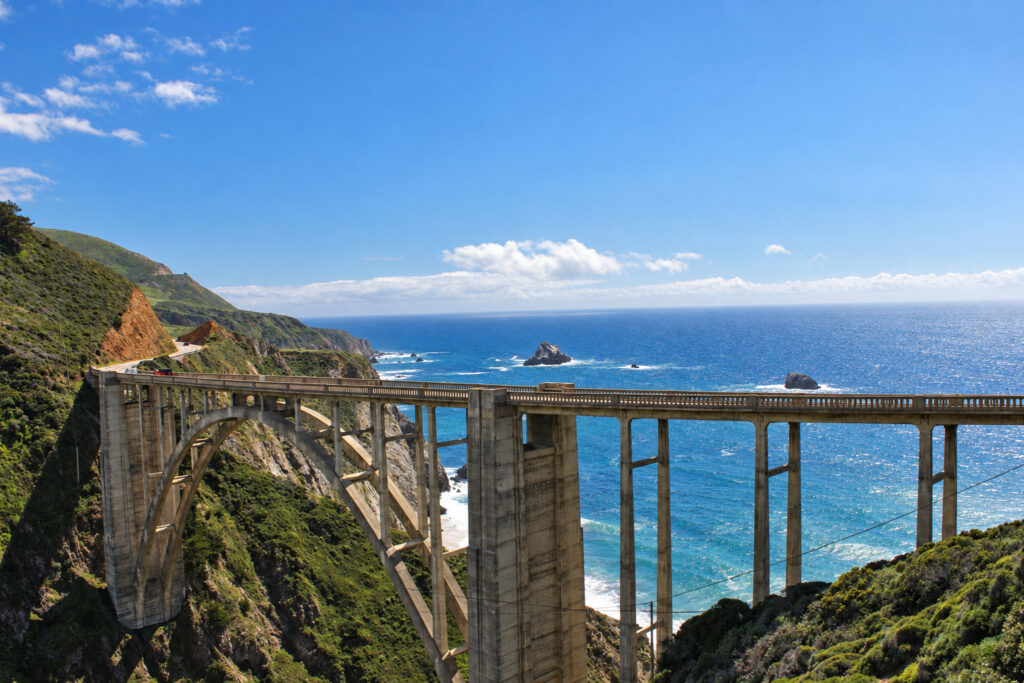
Few landmarks capture the beauty of California’s Central Coast quite like Bixby Creek Bridge. Stretching across a dramatic coastal canyon along Highway 1, this historic concrete arch bridge is one of the most recognizable and photographed landmarks in Big Sur.
With sweeping Pacific Ocean views, rugged cliffs, and rolling coastal hills, Bixby Bridge is an iconic feature of California’s coastal highway. However, the bridge was originally designed as a transportation crossing, not a scenic attraction, and its surroundings present significant safety challenges for visitors attempting to stop.
Where Is Bixby Bridge Located?
Bixby Bridge is located along California Highway 1 in Monterey County, approximately 13 miles south of Carmel-by-the-Sea and just north of the main Big Sur area.
The bridge crosses Bixby Creek Canyon, where the Santa Lucia Mountains meet the Pacific Ocean. Standing approximately 280 feet above the canyon floor, its spectacular setting makes it one of the most recognizable landmarks along California’s Pacific Coast highway.
A Brief History of Bixby Creek Bridge
Construction of Bixby Creek Bridge began in 1931 and ended in 1932. The project helped connect Big Sur’s isolated coastline to the rest of California.
Previously, travelers relied on the narrow and winding Old Coast Road. The new 714-foot bridge provided a safer, more reliable route across the rugged canyon.
Over time, Bixby Bridge became a symbol of California’s scenic Highway 1. However, engineers designed it for transportation, not sightseeing or roadside tourism.
Bixby Bridge Parking and Visitor Safety
Although Bixby Bridge attracts considerable attention from photographers and travelers, it is not a designated scenic overlook or roadside attraction.
Highway 1 is a busy coastal highway with narrow shoulders, sharp curves, and limited visibility. Consequently, stopping near the bridge can create dangerous conditions for motorists and pedestrians.
In 2026, Monterey County introduced additional parking restrictions near Bixby Bridge. These measures aim to reduce congestion and improve public safety.
Several hazards make the area particularly challenging:
- Limited parking: Parking restrictions prohibit vehicles from stopping in certain areas near the bridge. Motorists must obey all posted signs.
- Highway traffic: Vehicles regularly travel through this narrow corridor. Sudden stops, unsafe U-turns, and pedestrians crossing the highway increase accident risks.
- Steep coastal cliffs: Rugged slopes, unstable ground, and sharp drop-offs surround the bridge. Approaching cliff edges can lead to serious injuries or fatal falls.
- Photography hazards: Some visitors venture onto narrow shoulders or steep terrain to capture photographs. These activities can place both pedestrians and motorists at risk.
Furthermore, the bridge lacks the infrastructure typically found at established scenic overlooks. Its popularity can therefore create a misleading impression that the surrounding roadside areas are safe for sightseeing.
For these reasons, motorists should avoid stopping near the bridge. The safest way to appreciate the bridge is generally while traveling along Highway 1.
Bixby Bridge: An Iconic Highway 1 Landmark
More than 90 years after its construction, Bixby Bridge remains one of the most recognizable symbols of Big Sur and California’s scenic Highway 1.
Its elegant concrete arch, dramatic coastal setting, and historic significance make it an extraordinary example of engineering within one of California’s most beautiful natural landscapes.
However, Bixby Bridge is first and foremost an active highway crossing, not a designated sightseeing destination. With restricted parking, continuous vehicle traffic, and steep coastal terrain, motorists should appreciate this historic landmark responsibly without creating unsafe roadside conditions.
For travelers exploring the region, Big Sur offers numerous established state parks, coastal overlooks, and recreational areas that provide safer opportunities to experience California’s spectacular coastline.