
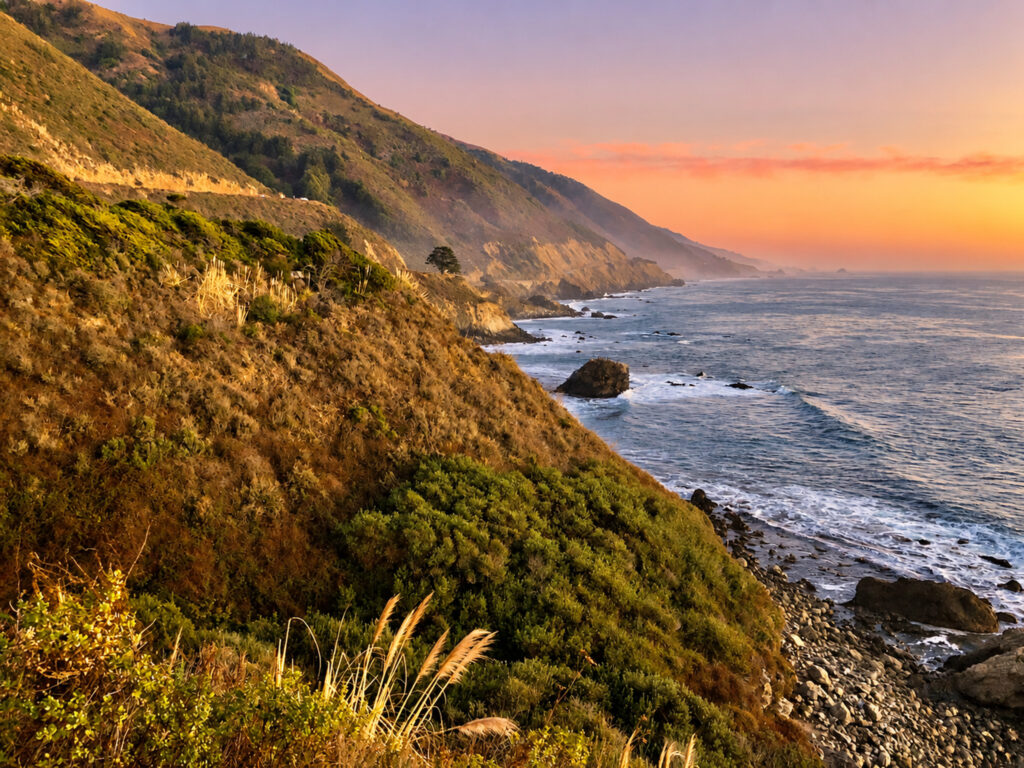
Big Sur is one of California’s most photogenic destinations, where dramatic coastal cliffs, winding highways, towering redwoods, and the Pacific Ocean create extraordinary opportunities for photography.
Whether you’re an experienced landscape photographer or simply looking to capture beautiful vacation memories, Big Sur offers incredible scenery around nearly every turn. From the iconic Bixby Creek Bridge to secluded beaches and panoramic coastal overlooks, the possibilities are endless.
This Big Sur photography guide highlights the best locations for coastal views, along with practical tips on lighting, sunrise versus sunset, composition, and parking along Highway 1.
Best Big Sur Photography Spots Along Highway 1
The most rewarding photography locations are spread along Highway 1 between Carmel-by-the-Sea and San Simeon. Each offers a different perspective of the coastline, and many can be enjoyed without a strenuous hike.
1. Bixby Creek Bridge: Big Sur’s Most Iconic Photograph
Best for: Coastal landscapes, architecture, and dramatic highway views
Bixby Creek Bridge is arguably the most recognizable landmark in Big Sur. Its graceful concrete arch spans a deep canyon surrounded by coastal mountains, making it a favorite subject for photographers.
What makes Bixby Bridge especially photogenic is the contrast between the bridge’s architecture and the surrounding natural landscape. The Pacific Ocean, rugged cliffs, and winding highway provide a beautiful backdrop.
Photography tips:
- Use a wide-angle lens to capture the bridge within the broader coastal landscape.
- Experiment with compositions that include the surrounding mountains and ocean.
- Visit during late afternoon for warmer light along the coastline.
- On foggy days, photograph the bridge against the mist-covered hills for a dramatic atmosphere.
Best time: Late afternoon or golden hour, depending on weather and cloud cover.
Parking and access: Parking and stopping are prohibited in the immediate vicinity of Bixby Bridge. Photograph the landmark only from legally accessible viewpoints away from the restricted bridge approaches. Never stop in traffic, block driveways, or enter closed roadside areas.
2. Garrapata State Park: Rugged Cliffs and Wild Coastal Beauty
Best for: Ocean panoramas, coastal wildflowers, and dramatic seascapes
Located south of Carmel, Garrapata State Park offers some of the most beautiful and varied coastal scenery in the Big Sur region.
The park features rocky headlands, crashing waves, coastal vegetation, and trails overlooking the Pacific Ocean. Compared with more recognizable landmarks, Garrapata provides opportunities to photograph the coastline from several different perspectives.
Soberanes Point is particularly rewarding, offering sweeping ocean views and rugged rock formations.
Photography tips:
- Explore the designated coastal paths around Soberanes Point for different compositions.
- Use the shoreline and cliffs as leading lines toward the ocean.
- Visit during spring to capture colorful wildflowers.
- Try longer exposures to create a soft, flowing appearance in moving water.
Best time: Early morning for quieter conditions or late afternoon for warmer coastal light.
Parking and access: Roadside parking is available only in permitted areas along Highway 1. The numbered coastal access gates near Soberanes Point, particularly Gates 8–10, are useful starting points. Stay on established trails and avoid unstable cliff edges.
3. Hurricane Point: Panoramic Views of the Big Sur Coastline
Best for: Wide-angle landscape photography and expansive ocean views
Just south of Bixby Bridge, Hurricane Point offers one of Big Sur’s most impressive elevated coastal perspectives.
From this stretch of Highway 1, the landscape opens to reveal rolling coastal mountains, steep cliffs, and the Pacific Ocean stretching toward the horizon.
The elevated perspective makes Hurricane Point especially suitable for photographers who want to capture the scale and ruggedness of Big Sur.
Photography tips:
- Use a wide-angle lens to emphasize the vast coastline.
- Include the winding highway in your composition to create depth.
- Look for cloud shadows moving across the coastal mountains.
- Use a fast shutter speed when strong winds make tripod photography difficult.
Best time: Late afternoon, particularly when the sun illuminates the western-facing landscape.
Parking and access: Hurricane Point is exposed to strong winds. Only use an established turnout where stopping is legal and safe. If parking is unavailable, continue to the next permitted viewpoint.
4. Point Sur: Lighthouse and Coastal Landscapes
Best for: Historic landmarks, minimalist compositions, and coastal silhouettes
Point Sur is one of Big Sur’s most distinctive landmarks. Rising from a massive volcanic rock formation beside the Pacific Ocean, the historic lighthouse creates a striking focal point against the surrounding coastline.
Photographers can capture Point Sur as part of a broad coastal landscape or use a longer focal length to emphasize its isolated position.
The surrounding grasslands, mountains, and ocean provide beautiful opportunities for composition.
Photography tips:
- Use a telephoto lens to emphasize the rock formation and lighthouse.
- Include the open coastal landscape for a sense of scale.
- Photograph the landmark in soft morning light for a quieter atmosphere.
- Look for silhouettes and cloud formations near sunset.
Best time: Morning for softer atmospheric conditions or late afternoon for dramatic light.
Parking and access: The lighthouse grounds are accessible through scheduled guided tours, not unrestricted roadside entry. Respect posted access restrictions and use only designated parking or legal viewpoints.
5. Pfeiffer Beach: Keyhole Rock and Sunset Photography
Best for: Sunset photography, dramatic waves, and natural rock formations
Pfeiffer Beach is one of the most distinctive photography locations in Big Sur.
Known for its dramatic rock formations, patches of purple-tinted sand, and powerful ocean waves, the beach offers exceptional opportunities for coastal photography.
The centerpiece is Keyhole Rock, a large offshore formation with an opening that allows sunlight and ocean waves to pass through.
During certain periods of the year, particularly around winter, the setting sun can align with the opening and create a spectacular beam of light.
Photography tips:
- Visit near sunset for dramatic lighting around Keyhole Rock.
- Use a tripod and slower shutter speed to capture movement in the waves.
- Experiment with reflections on wet sand during lower tides.
- Include shoreline patterns or purple sand in foreground compositions.
Best time: Sunset, particularly on clear evenings.
Parking and access: Pfeiffer Beach is reached via narrow Sycamore Canyon Road, and parking is limited and generally subject to a day-use fee. Large vehicles may be restricted. Check current access conditions before visiting, and never turn your back on the surf.
6. McWay Falls: A Classic Big Sur Coastal Scene
Best for: Waterfall photography, turquoise coves, and coastal landscapes
McWay Falls is one of the most recognizable natural features along the Big Sur coastline.
Located within Julia Pfeiffer Burns State Park, the approximately 80-foot waterfall drops from a coastal cliff into a secluded cove framed by rugged rock formations and turquoise ocean water.
The combination of water, coastal cliffs, and natural scenery creates a beautiful landscape composition.
Photography tips:
- Use a medium zoom lens to frame the waterfall and surrounding cove.
- Experiment with wider compositions that include the coastal cliffs.
- Photograph during softer light to reduce contrast between shaded cliffs and bright water.
- After seasonal rains, the waterfall may have a stronger flow.
Best time: Morning or late afternoon, depending on cloud cover and shadows.
Parking and access: The traditional Waterfall Overlook Trail is closed for repairs as of October 2026. Confirm whether an officially designated viewing location is accessible before visiting. The beach and waterfall are strictly off-limits, and crossing barriers is prohibited.
7. Ragged Point: Dramatic Southern Big Sur Views
Best for: Elevated ocean panoramas, coastal cliffs, and sunset landscapes
Located near the southern end of Big Sur, Ragged Point offers spectacular views over the Pacific Ocean and the rugged coastline.
The dramatic cliffs and expansive ocean scenery make this a rewarding final stop for photographers traveling south toward San Simeon.
Ragged Point is also a pleasant place to take a break, enjoy the coastal atmosphere, and capture the changing colors of the landscape.
Photography tips:
- Use a wide-angle lens to capture the contrast between cliffs and ocean.
- Visit during golden hour for warmer coastal colors.
- Include foreground vegetation or coastal features to add depth.
- Look for layers of distant headlands fading into the horizon.
Best time: Late afternoon and sunset.
Parking and access: Visitor parking is available at Ragged Point Inn, subject to posted restrictions. Use designated public areas and respect private property.
Sunrise vs. Sunset: When Is Big Sur Best for Photography?
One of the most important considerations when photographing Big Sur is the direction of the sunlight.
Because Big Sur faces primarily west toward the Pacific Ocean, sunrise and sunset create noticeably different photographic conditions.
Sunrise Photography: Soft Light and Quiet Coastlines
Sunrise can be an excellent time for photography, particularly for photographers who prefer fewer crowds and softer atmospheric conditions.
Since the sun rises over the inland mountains, much of the coastline may initially remain in shadow. However, this can create beautiful contrasts between illuminated ridges, mist, and the Pacific Ocean.
Early morning is particularly rewarding when low clouds or coastal fog move through the hills.
Best subjects for morning photography:
- Coastal mountains and mist-covered valleys
- Point Sur and surrounding grasslands
- Garrapata’s coastal bluffs
- Redwood forests and shaded landscapes
Sunset Photography: Golden Light and Dramatic Ocean Views
For classic Big Sur coastal photographs, sunset is often the most rewarding time of day.
The west-facing coastline provides excellent opportunities to capture warm evening light, silhouettes, colorful skies, and reflections across the Pacific Ocean.
Pfeiffer Beach is particularly well known for its sunset photography, while Hurricane Point and Ragged Point offer dramatic elevated perspectives.
Best subjects for sunset photography:
- Pfeiffer Beach and Keyhole Rock
- Hurricane Point
- Ragged Point
- Coastal cliffs and ocean silhouettes
Photography tip: Arrive 30–60 minutes before sunset to scout your composition and stay through blue hour if access rules and safety conditions allow.
Best Seasons for Big Sur Photography
Big Sur is photogenic year-round, but each season offers different lighting, weather, and landscape conditions.
Spring: Green Hills and Wildflowers
Spring brings greener coastal mountains and wildflowers to portions of the coastline. Garrapata State Park can be particularly beautiful during this period.
Summer: Coastal Fog and Atmospheric Landscapes
Summer mornings frequently bring marine fog, sometimes obscuring famous coastal views. While fog can limit visibility, it also creates atmospheric photographs of cliffs emerging from the mist.
Fall: Clearer Skies and Warm Evening Light
Fall often offers favorable conditions for coastal photography, including clear afternoons, warm evening light, and fewer visitors compared with the busiest summer period.
Winter: Powerful Surf and Dramatic Weather
Winter can bring dramatic clouds, rough seas, and stronger waterfall flows after rain. Photographers should also be prepared for heavy storms, strong winds, and potential Highway 1 closures.
Essential Photography Tips for Big Sur
You don’t need professional equipment to capture beautiful images of Big Sur. A smartphone can produce excellent results, especially when combined with good lighting and thoughtful composition.
However, a few practical techniques can help improve your photographs.
Use Leading Lines
Highway 1, rugged ridgelines, and coastal cliffs can guide the viewer’s eye through a photograph. Try positioning these natural features so they draw attention toward the ocean or a distant landmark.
Photograph During Golden Hour
Golden hour occurs shortly after sunrise and before sunset, when sunlight is lower and warmer. These conditions can produce softer shadows and more appealing colors.
Take Advantage of Fog
Fog isn’t necessarily a disadvantage. It can add depth, soften harsh lighting, and create a dramatic atmosphere along the coastline.
Bring the Right Lenses
For photographers using interchangeable-lens cameras, a wide-angle lens is useful for expansive coastal landscapes, while a telephoto lens helps isolate distant landmarks, wildlife, and details along the cliffs.
A standard zoom lens is often the most practical option for a Highway 1 photography trip.
Respect Safety and Parking Restrictions
Big Sur’s roadside photography locations can be dangerous because of narrow shoulders, blind curves, unstable cliffs, and rapidly changing weather.
Never stop in a travel lane for photographs, park in prohibited areas, climb over barriers, or approach unstable cliff edges. Protect sensitive vegetation by remaining on designated trails.
Drone photography is restricted or prohibited in many protected areas along the Big Sur coast. Check the rules for each location before flying.
Frequently Asked Questions About Big Sur Photography
What are the best photography spots in Big Sur?
Some of the best Big Sur photography spots include Bixby Creek Bridge, Garrapata State Park, Hurricane Point, Point Sur, Pfeiffer Beach, McWay Falls, and Ragged Point. Each offers different opportunities for coastal landscape photography.
Is sunrise or sunset better for Big Sur photography?
Sunset is generally better for dramatic ocean-facing views because much of Big Sur’s coastline faces west. Sunrise is ideal for quieter conditions, coastal mist, and mountain landscapes.
Where can I photograph Bixby Creek Bridge?
Bixby Bridge can be photographed from legally accessible viewpoints along the surrounding Highway 1 corridor. Parking and stopping restrictions apply immediately around the bridge, so do not use closed or prohibited roadside areas.
What is the best month for Big Sur photography?
September and October are often excellent months for Big Sur photography because of potentially clearer skies, pleasant weather, and attractive evening light. Spring is another popular season for green hillsides and coastal wildflowers.
Can you photograph Big Sur without hiking?
Yes. Several of Big Sur’s coastal landscapes can be photographed from designated roadside viewpoints, permitted parking areas, and short walking paths. Locations such as Pfeiffer Beach and Soberanes Point require additional walking or driving detours.
Can you use a drone for photography in Big Sur?
Drone use is prohibited or restricted in many Big Sur locations, including California State Parks and other protected areas. Additional airspace and wildlife restrictions may apply. Always verify the specific property’s rules and applicable FAA requirements before flying.
Final Thoughts: Capturing the Beauty of Big Sur
Big Sur is a destination where extraordinary photographic opportunities are found around nearly every bend in Highway 1.
From the iconic architecture of Bixby Creek Bridge to the dramatic rock formations of Pfeiffer Beach and the sweeping ocean views of Ragged Point, the coastline offers endless inspiration for photographers of all experience levels.
The key to great Big Sur photography is patience. Allow time for changing light, explore different compositions, and appreciate the natural beauty rather than rushing between locations.
Whether you’re capturing photographs with a professional camera or your smartphone, Big Sur offers the kind of scenery that turns a simple road trip into an unforgettable visual experience.
Continue exploring Big Sur: Plan your next adventure with our guides to the best scenic stops along Highway 1, top hiking trails, and unforgettable Big Sur road trip itineraries.