Learn about Bixby Bridge in Big Sur, including its history, location, Highway 1 parking restrictions, and important roadside safety considerations.
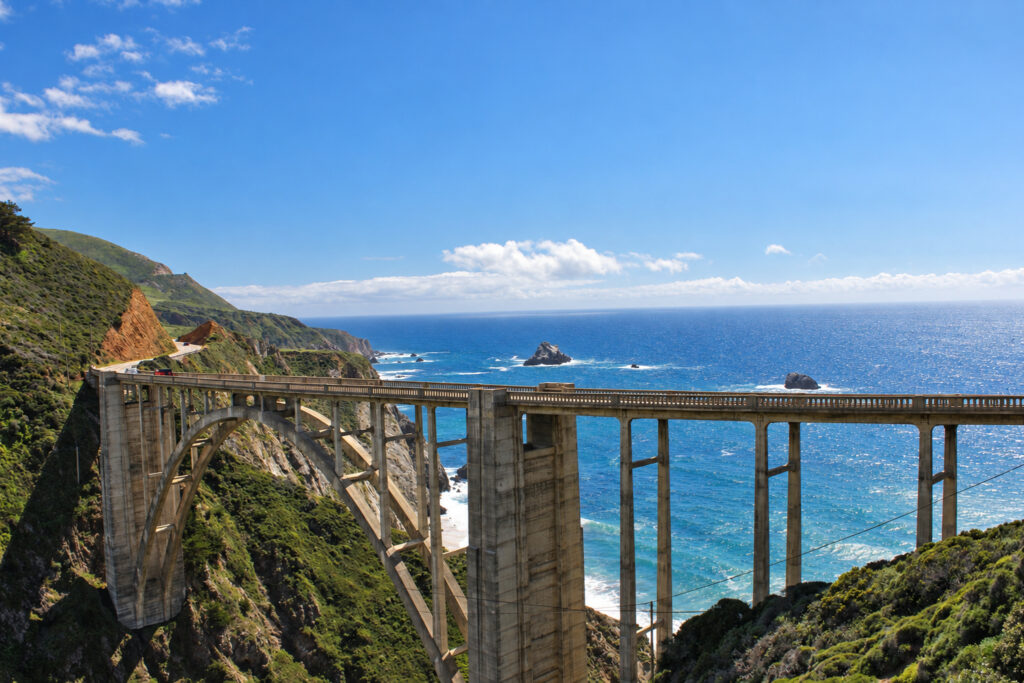
Few landmarks capture the beauty of California’s Central Coast quite like Bixby Creek Bridge. Stretching across a dramatic coastal canyon along Highway 1, this historic concrete arch bridge is one of the most recognizable and photographed landmarks in Big Sur.
With sweeping Pacific Ocean views, rugged cliffs, and rolling coastal hills, Bixby Bridge is an iconic feature of California’s coastal highway. However, the bridge was originally designed as a transportation crossing, not a scenic attraction, and its surroundings present significant safety challenges for visitors attempting to stop.
Where Is Bixby Bridge Located?
Bixby Bridge is located along California Highway 1 in Monterey County, approximately 13 miles south of Carmel-by-the-Sea and just north of the main Big Sur area.
The bridge crosses Bixby Creek Canyon, where the Santa Lucia Mountains descend toward the Pacific Ocean. Standing approximately 280 feet above the canyon floor, its spectacular setting makes it one of the most recognizable landmarks along California’s coastal highway.
A Brief History of Bixby Creek Bridge
Completed in 1932 during the Great Depression, Bixby Creek Bridge was an impressive engineering achievement that helped connect the isolated Big Sur coastline to the rest of California.
Before its construction, travelers relied on the rugged and winding Old Coast Road. The new 714-foot concrete arch bridge provided a more reliable transportation route through the region.
Although Bixby Bridge has since become one of California’s most photographed landmarks, it was built to carry traffic across a rugged canyon, not to accommodate sightseeing or roadside tourism.
Bixby Bridge Parking and Visitor Safety
While Bixby Bridge has become a popular photography destination, visitors should understand that the bridge and surrounding highway were never designed to accommodate large numbers of sightseeing vehicles or pedestrians.
Highway 1 is an active, winding coastal highway with narrow shoulders, limited visibility, and steady vehicle traffic. Parking near the bridge has become increasingly challenging, and Monterey County introduced additional parking restrictions in 2026 to address traffic congestion and safety concerns.
Several important safety considerations apply to the area:
- Limited parking: Roadside parking near the bridge is heavily restricted. Visitors should follow posted signs and never park along prohibited shoulders or turnouts.
- Busy highway: Highway 1 carries regular vehicle traffic, and stopping unexpectedly, walking along the roadway, or crossing the highway can be extremely dangerous.
- Steep coastal cliffs: The surrounding terrain features sharp drop-offs, unstable soil, and rugged slopes. Approaching cliff edges or climbing beyond established safe areas presents serious risks.
- Photography hazards: Standing in the roadway, climbing barriers, or venturing onto steep terrain to capture photographs can result in serious injury.
The popularity of Bixby Bridge can create the impression that it is a designated scenic overlook. In reality, the area has limited visitor facilities, and the safest way to appreciate the bridge is generally while traveling along Highway 1 rather than attempting to stop nearby.
Bixby Bridge: An Iconic Highway 1 Landmark
More than 90 years after its construction, Bixby Bridge remains one of the most recognizable symbols of Big Sur and California’s scenic Highway 1.
Its elegant concrete arch, dramatic coastal setting, and historic significance make it an extraordinary example of engineering within one of California’s most beautiful natural landscapes.
However, Bixby Bridge is first and foremost an active highway crossing, not a designated sightseeing destination. With restricted parking, continuous vehicle traffic, and steep coastal terrain, motorists should appreciate this historic landmark responsibly without creating unsafe roadside conditions.
For travelers exploring the region, Big Sur offers numerous established state parks, coastal overlooks, and recreational areas that provide safer opportunities to experience California’s spectacular coastline.