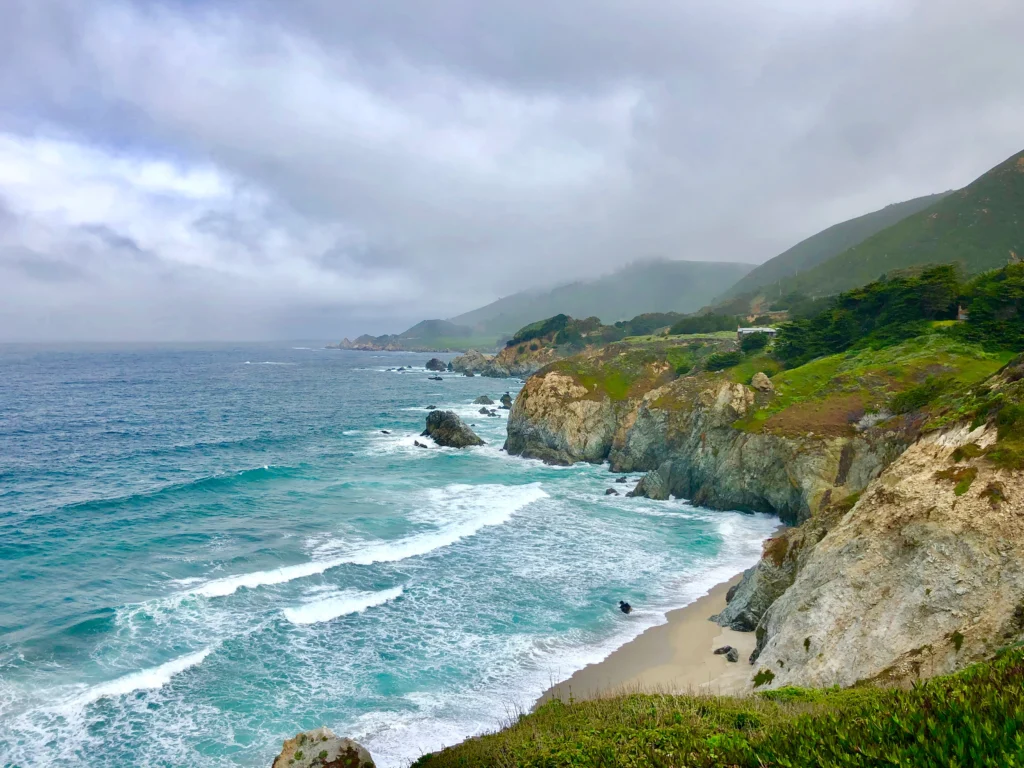
Big Sur beaches offer some of California’s most spectacular coastal scenery. Towering cliffs, secluded coves, and crashing Pacific waves create an unforgettable landscape. Along Highway 1, visitors can discover sandy beaches, dramatic rock formations, and beautiful coastal trails.
Unlike the crowded beaches of Southern California, Big Sur offers a more rugged experience. Many beaches sit beneath steep cliffs and require a short hike to reach. Others provide easier access through designated parking areas.
Whether you enjoy photography, coastal walks, or simply relaxing by the ocean, Big Sur has plenty to explore.
However, this coastline also demands caution. Strong currents, unpredictable waves, and changing weather can create dangerous conditions. Therefore, understanding beach access and safety is essential before visiting.
What Makes Big Sur Beaches Unique?
Big Sur stretches along California’s Central Coast between Carmel and San Simeon. Here, the Santa Lucia Mountains rise sharply above the Pacific Ocean.
This dramatic geography creates a coastline filled with rocky headlands, narrow coves, and secluded sandy beaches.
Unlike Southern California’s wide beaches and developed boardwalks, Big Sur remains largely undeveloped. As a result, visitors experience a quieter and more natural coastal environment.
Additionally, many beaches offer excellent opportunities for photography, wildlife viewing, and coastal hiking. However, swimming is generally discouraged because of dangerous ocean conditions.
Accessibility also varies considerably. Some beaches have designated parking areas and established trails. Meanwhile, others require longer hikes or have limited facilities.
Before visiting, always check current access conditions and follow posted restrictions.
Best Beaches in Big Sur
Several beautiful beaches lie along Highway 1. Each offers a different perspective of Big Sur’s rugged coastline.
From Pfeiffer Beach’s famous rock formations to Sand Dollar Beach’s broad sandy shoreline, these destinations showcase California’s coastal beauty.
Pfeiffer Beach
Pfeiffer Beach is one of the most famous beaches in Big Sur. Its dramatic rock formations, powerful surf, and distinctive purple sand attract photographers and nature lovers.
The beach’s most recognizable landmark is Keyhole Arch. This enormous rock formation features a natural opening that frames the Pacific Ocean.
Additionally, small deposits of purple sand appear along portions of the beach. These unusual colors come from manganese garnet minerals in the surrounding hills.
Location and Access
Pfeiffer Beach sits west of Highway 1 near the Big Sur village area. Visitors reach it through Sycamore Canyon Road, a narrow and winding access road.
A designated parking area serves the beach. However, parking is limited and a day-use fee generally applies.
The beach is an excellent destination for photography and coastal scenery. Nevertheless, visitors should remain well away from the surf and avoid climbing offshore rocks.
Sand Dollar Beach
Sand Dollar Beach is one of the largest sandy beaches along the Big Sur coastline. Located in the southern region, it offers expansive ocean views and a beautiful natural setting.
Steep cliffs surround the beach, while waves break across its broad shoreline. Consequently, the landscape feels especially dramatic during periods of high surf.
The beach is popular for photography, beachcombing, and coastal walks when conditions are safe.
Location and Access
Sand Dollar Beach lies along Highway 1 near Plaskett Creek Campground, south of the main Big Sur area.
Visitors can use a designated day-use parking area and follow an established trail and stairs to the beach.
Parking fees may apply. Additionally, the beach has no lifeguard service, and strong surf can create dangerous conditions.
Although surfers sometimes visit Sand Dollar Beach, ocean activities require considerable experience. For most visitors, sightseeing and walking are better options.
Garrapata State Beach
Garrapata State Beach offers a beautiful combination of sandy shoreline, coastal cliffs, and rugged Pacific Ocean scenery.
Located toward the northern end of Big Sur, the beach forms part of Garrapata State Park. The surrounding landscape features coastal vegetation, rocky headlands, and seasonal wildflowers.
Nearby Soberanes Point also provides dramatic coastal views. However, powerful waves and exposed rocks make this area particularly hazardous.
Location and Access
Garrapata State Park sits along Highway 1 south of Carmel-by-the-Sea.
Visitors can reach the beach through designated access trails, including the route near Gate 19. Roadside parking is limited, so motorists should use only legal parking areas.
The beach provides excellent opportunities for photography and coastal walks.
Additionally, leashed dogs are permitted in the designated beach area near Gate 19. However, pets are restricted in most other parts of the park.
Visitors should remain on established trails and avoid approaching unstable cliffs.
Andrew Molera State Park Beach
Andrew Molera State Park offers one of Big Sur’s most peaceful coastal experiences. Its broad beach lies near the mouth of the Big Sur River.
Unlike beaches located directly beside Highway 1, Andrew Molera requires a scenic walk through coastal meadows.
Along the way, visitors can enjoy views of surrounding hills, open grasslands, and the Big Sur River.
The beach features a natural shoreline with sand, driftwood, and rugged coastal scenery. As a result, it appeals to hikers and visitors seeking a quieter experience.
Location and Access
Andrew Molera State Park is located along Highway 1, just north of the main Big Sur village area.
Visitors typically reach the beach using the Creamery Meadow Trail. This relatively easy route covers approximately two miles round trip.
However, the route crosses the Big Sur River. A seasonal footbridge may provide access, while river conditions can affect crossings during other periods.
The park provides designated parking, and a day-use entrance fee generally applies.
Before visiting, check trail and river conditions. Additionally, dogs are not permitted on the park’s beach-access trails.
Limekiln State Park Beach
Limekiln State Park combines two of Big Sur’s most distinctive landscapes: towering redwood forests and a rugged Pacific coastline.
The park features a small beach surrounded by coastal cliffs. Meanwhile, forested canyons extend inland toward historic lime kilns and scenic trails.
This combination makes Limekiln a particularly interesting destination for nature lovers.
Location and Access
Limekiln State Park sits along Highway 1 in southern Big Sur, north of the San Luis Obispo County line.
Visitors can access the coastal day-use area through the park entrance, subject to current restrictions.
However, landslides, construction, and environmental conditions can affect access to certain areas. Parking is also limited, and entrance fees may apply.
Before traveling, check California State Parks for the latest information.
Although the beach offers beautiful coastal scenery, its rocky shoreline and powerful waves require caution.
Can You Swim at Big Sur Beaches?
Swimming at Big Sur beaches is generally not recommended. The Pacific Ocean along this coastline can be extremely dangerous, even when conditions appear calm.
Unlike many Southern California beaches, Big Sur has powerful shorebreak, cold water, and unpredictable currents.
Several hazards deserve particular attention:
- Sneaker waves: Unexpected waves can travel much farther up the beach than normal. They can knock people down and pull them into the ocean.
- Rip currents: Strong currents can carry swimmers away from shore, often without visible warning.
- Powerful shorebreak: Large waves can break directly onto steep beaches, creating a serious injury risk.
- Cold water: Pacific Ocean temperatures remain cool throughout the year. Sudden immersion can cause cold-water shock.
- Rocky coastlines: Waves can sweep people from exposed rocks and coastal ledges.
Furthermore, many Big Sur beaches lack lifeguards and nearby emergency services.
Therefore, visitors should treat these beaches primarily as scenic destinations rather than swimming locations.
Are Big Sur Beaches Free to Visit?
Some Big Sur beaches offer access without a separate admission fee. However, others charge for parking or entry.
Pfeiffer Beach and Sand Dollar Beach generally require day-use parking fees. Meanwhile, Andrew Molera and Limekiln operate within California State Parks, where vehicle entrance fees usually apply.
Garrapata State Beach offers designated coastal access without a staffed entrance station.
However, parking rules and fees can change. Always check current information before traveling.
Additionally, some parking areas fill quickly during weekends and holidays. Visitors should never park illegally along Highway 1 or block access roads.
When Is the Best Time to Visit Big Sur Beaches?
Big Sur’s coastline offers beautiful scenery throughout the year. However, weather, ocean conditions, and visitor crowds vary by season.
Spring: Coastal hills turn green, and wildflowers bloom along many trails. Nevertheless, rain and strong surf can still occur.
Summer: Longer days make coastal exploration appealing. However, fog often covers the shoreline, especially during mornings.
Fall: Clearer skies and pleasant daytime temperatures often create excellent conditions for sightseeing. Additionally, beaches may feel quieter after the summer travel season.
Winter: Dramatic waves and storm clouds transform the coastline. However, heavy surf, rain, and landslides can limit access.
For many visitors, late spring and early fall offer a good balance of scenery and comfortable weather.
Regardless of the season, always review local weather forecasts and current ocean conditions.
Big Sur Beach Safety and Conservation
Big Sur’s coastline is beautiful, but its natural environment requires respect. Steep cliffs, unstable rocks, and powerful waves create hazards throughout the region.
Beach Hazards and Dangerous Surf
The Big Sur coastline occasionally experiences severe surf events with breaking waves reaching 13 to 18 feet or more.
During these events, California State Parks and emergency agencies warn visitors to stay away from the water’s edge. They also advise people to remain off exposed rocks and coastal ledges.
Areas such as Soberanes Point and Garrapata State Park require particular caution. Here, unexpected waves can surge across rocky surfaces without warning.
Even during calmer weather, sneaker waves can reach well beyond the normal shoreline. Therefore, never turn your back on the ocean.
Before visiting, check the National Weather Service for active beach hazard statements.
Protecting Big Sur’s Natural Environment
Responsible visitors also help preserve this fragile coastline.
- Stay on designated trails and use established beach access routes.
- Avoid unstable cliffs, restricted areas, and closed trails.
- Keep a safe distance from seals, sea otters, and other wildlife.
- Remove all trash and avoid disturbing plants or natural features.
- Follow posted restrictions for dogs, fires, and camping.
- Respect private property and protected coastal habitats.
Additionally, always check tide conditions before walking along narrow beaches. Rising water can block return routes or trap visitors against cliffs.
By following these precautions, visitors help protect both themselves and Big Sur’s coastal environment.
Frequently Asked Questions About Big Sur Beaches
Does Big Sur Have Sandy Beaches?
Yes. Big Sur has several beautiful sandy beaches, including Pfeiffer Beach, Sand Dollar Beach, and Garrapata State Beach.
However, many sections of the coastline consist of rocky cliffs and narrow coves.
What Is the Most Popular Beach in Big Sur?
Pfeiffer Beach is among Big Sur’s most famous and photographed beaches. Visitors recognize it for Keyhole Arch and its unusual purple sand.
Sand Dollar Beach is another popular destination, especially for its expansive sandy shoreline.
Are Big Sur Beaches Safe for Swimming?
Generally, no. Strong currents, cold water, and powerful waves make swimming dangerous along much of the Big Sur coastline.
Therefore, most visitors should focus on coastal sightseeing and walking rather than entering the ocean.
Can You Bring Dogs to Big Sur Beaches?
Dog policies vary by location.
For example, Garrapata State Beach permits leashed dogs near Gate 19. Limekiln State Park also permits leashed dogs on its beach, subject to current restrictions.
However, Andrew Molera State Park prohibits dogs on beach-access trails.
Always check individual park rules before bringing pets.
Can You Camp on Big Sur Beaches?
Camping directly on Big Sur beaches is generally restricted or prohibited.
However, several established campgrounds lie near the coast, including Kirk Creek and Plaskett Creek Campgrounds.
Always use designated camping areas and confirm reservation requirements before traveling.
Which Big Sur Beaches Are Best for Families?
Pfeiffer Beach and Sand Dollar Beach offer relatively convenient access through designated parking areas.
However, neither should be treated as a safe swimming beach. Families must remain cautious around strong waves, rocks, and steep coastal terrain.
For families who enjoy hiking, Andrew Molera State Park offers a scenic beach walk when trail and river conditions permit.
Discover Big Sur’s Beautiful Coastline
From Pfeiffer Beach’s iconic rock formations to the expansive shoreline of Sand Dollar Beach, Big Sur beaches showcase California’s coastal beauty.
Each destination offers something different. Some feature sandy coves and dramatic cliffs, while others combine coastal hiking with peaceful natural surroundings.
However, Big Sur is not a typical beach destination. Its powerful surf, rugged geography, and limited facilities require careful planning.
Before visiting, check road conditions, beach access, and weather advisories. Most importantly, respect the ocean and follow all posted safety restrictions.
For more coastal adventures, explore our guides to the best things to do in Big Sur, scenic Highway 1 stops, and unforgettable Big Sur road trip itineraries.